Global Asset Allocation丨October 2026 Outlook: The Short End Ebbs, the Long End Holds — Lock In Carry, Buy Delivery, Stay Hedged

Don't bet on when the long end turns lower — focus on the return quality of assets in a high-rate environment.
Key Conclusions
October's core tension: expectations of near-term hikes are cooling, but long-end yields remain elevated, and whether rates have truly peaked is still unconfirmed.
Three things need to be verified next:
Whether labor weakness is spreading into income and consumption, triggering a recession trade.
Whether inflation and fiscal pressure continue to keep long-end yields from falling.
Whether AI earnings and the midterms bring a fresh repricing of risk premium.
October therefore does not call for the simple trade of "weak payrolls = buy long bonds, buy growth." Instead, stay disciplined:
Low-volatility assets — lock in carry
Medium-volatility assets — buy cash flows
High-volatility assets — buy only AI certainty, Asian structural opportunities and tail-risk insurance
Core Barbell
45% Low-Vol + 30% Medium-Vol + 25% High-Vol
Low-volatility (45%): Money market funds, short-to-intermediate bonds, short-to-intermediate TIPS
Cooling labor data lowers the odds of consecutive hikes, but fiscal dynamics and inflation still cap long-end performance. Rather than waiting for cuts, it is more attractive to lock in 1–5 year coupons today.
Medium-volatility (30%): Private credit, infrastructure
High rates continue to support floating-rate coupons. Private credit is shifting from sector beta toward underlying cash flows and manager selection; infrastructure keeps benefiting from AI, power and energy capex.
High-volatility (25%): Energy, gold, macro hedge funds, the AI value chain, Chinese tech going global, sports assets, digital assets
Energy and gold retain their tail-insurance function; equity exposure concentrates on AI earnings delivery, memory, advanced packaging, the power chain and Asian structural opportunities.
01 Global Asset Allocation
Objective: hold carry, harvest volatility, buy delivery, keep dry powder
1. Global: Energy flows are recovering, but geopolitical risk is not yet resolved
Middle East crude exports are recovering, easing supply pressure relative to the earlier period; however, the Strait of Hormuz has not fully returned to normal navigation, and shipping and insurance risks persist.
OPEC+ has kept its November production target unchanged, so the actual improvement in supply still depends on Middle East transit conditions.
Core view: energy is shifting from an offensive asset to an insurance asset.
Positioning: maintain a strategic overweight in energy, but do not chase the rally with heavy weight — its portfolio function is shifting from return source to risk insurance.
Low-volatility: short-to-intermediate bonds and TIPS, to preserve liquidity
Medium-volatility: energy transportation, power and infrastructure, or related private credit, to lock in cash flows
High-volatility: energy, gold and macro hedge funds, to hedge geopolitical reversals
If Middle East exports continue to recover, gradually take profits on tactical energy positions; if the situation at Hormuz deteriorates again, retain energy as insurance.
Chart 1: Hormuz oil flows recovering rapidly; the geopolitical risk premium begins to recede

Source: UBS, Merit Asset Management
Chart 2: Crude exports close to recovery; refined products remain the supply-chain bottleneck

Source: Rigzone, Merit Asset Management
2. United States: Hikes can pause, but the long end need not follow
Hiring continues to cool; if the weakness spreads further into income and consumption, the market will revisit the recession narrative.
Treasury supply and sticky inflation continue to support term premium — a Fed pause is not equivalent to a rapid decline in long-end yields.
With the midterms entering the front-loading window, fiscal, tax and regulatory expectations will amplify market volatility.
The US is forming a highly unusual combination: marginally cooling labor + still-high inflation + AI capex underpinning growth + long-end rates staying elevated.
Core view: the short end follows the Fed; the long end follows fiscal policy, inflation and nominal growth. Even if the Fed pauses, Treasuries beyond the 10-year point may not rally materially in tandem.
Chart 3: Short-end tightening expectations recede; long-end high yields remain intact

Source: FRED, Merit Asset Management
Positioning: overweight short-to-intermediate bonds, cautious on long duration; in US equities, buy earnings, not multiple expansion.
Overweight short-to-intermediate bonds: keep locking in the high-rate window
Cautious on long duration: wait for term premium to genuinely decline
Buy only earnings in US equities: stop trading indiscriminate multiple expansion
3. Japan: From policy normalization to trading the "pace of hikes"
The BOJ's normalization path is unchanged, and the market has begun pricing a faster hiking pace.
A rapid yen appreciation could trigger carry-trade unwinding and amplify volatility across global risk assets.
Japanese equities are moving from broad beta toward selectivity, with greater focus on rate normalization and improving capital returns.
Core view: Japan's real transmission channel is global liquidity — the yen + JGB yields + global carry trades.
Chart 4: The US–Japan rate differential remains wide; faster BOJ tightening raises carry-reversal risk

Source: Bloomberg, Merit Asset Management
Positioning: select beneficiaries of rate normalization, avoid weak-yen beta, and guard against carry-trade reversal.
Rate-normalization beneficiaries: retain financials such as banks and insurers
Structural equity opportunities: industrial automation, defense, and companies with improving shareholder returns
Cautious on weak-yen-dependent assets: avoid companies highly sensitive to yen depreciation and cheap funding
Hedge carry-trade risk: manage yen appreciation and deleveraging risk through global macro funds
4. China: Not a strong recovery, but "manufacturing stabilization + policy support"
Domestic demand and property remain soft; the current setup is closer to a policy-put trade than a broad reflation trade.
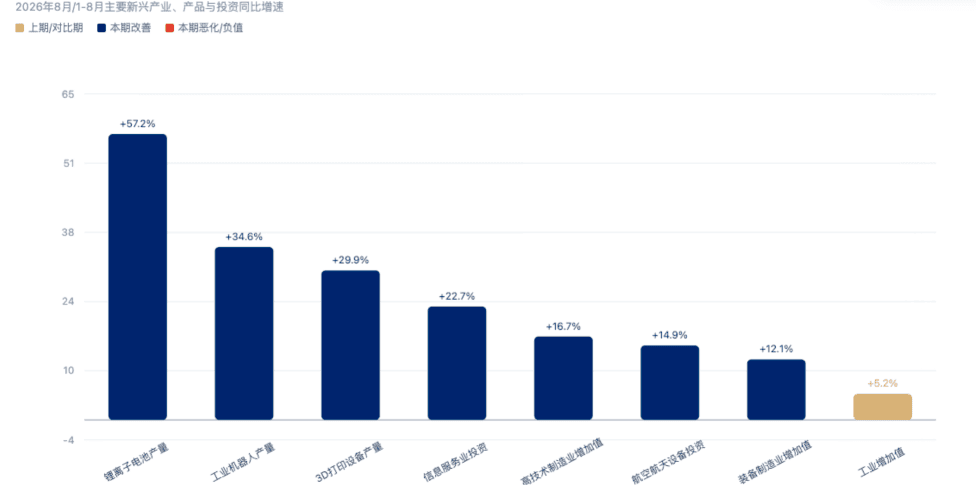
AI hardware, advanced manufacturing and tech going global retain relative advantage, with higher earnings visibility. I
f the external environment improves, Hong Kong tech and high-beta assets still have room for valuation repair.
Core view: China is still not a broad recovery trade — it is policy support + AI manufacturing + export competitiveness.
Chart 5: New quality productive forces continue to outperform the industrial complex; AI manufacturing remains a growth bright spot in China
Source: Merit Asset Management
Positioning: overweight AI manufacturing and tech going global, do not bet on a broad recovery, and retain dividend assets for defense.
Hong Kong tech: benefits from risk-appetite repair and AI earnings delivery
Tech going global: own companies with genuine global competitiveness and revenue growth
Advanced manufacturing: stay focused on AI hardware, automation and supply-chain upgrading
Dividend assets: provide cash flow and defensiveness in a weak-recovery environment
Consumer and property require clearer improvement in income, credit and asset prices before allocation is raised.
Chart 6: Household credit continues to contract; the domestic demand repair still lacks an agent willing to lever up

Source: Merit Asset Management
5. Asia: Don't buy EM beta — buy AI hardware certainty
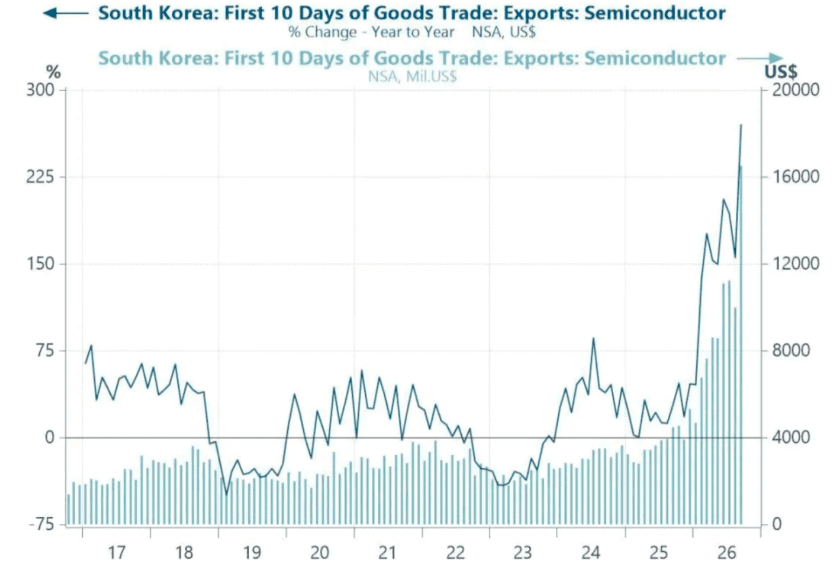
AI capex keeps transmitting into memory, advanced packaging and servers; support from the hardware cycle remains intact.
Korea remains the most direct equity expression of the HBM and DRAM shortage, with relatively stronger earnings elasticity.
High rates suppress multiple expansion, making Asian equities better suited to structural allocation around earnings delivery.
Core view: emerging markets are not a blanket buy — the allocation is structural, built around AI hardware and supply-chain reconfiguration.
Positioning: overweight Korean semiconductors and AI hardware; wait for long-end yields to stabilize before adding high-beta.
Korean equities: continue to serve as the core expression of the AI memory and semiconductor cycle
Semiconductor supply chain: focus on HBM, DRAM, advanced packaging and AI servers
Data-center power chain: benefits as AI capex diffuses into infrastructure
Cautious on high-beta: wait for long-end yields to stabilize before raising elasticity
Chart 7: Korean semiconductor exports accelerating; the AI hardware cycle is being delivered
Source: Korea Customs Service, Merit Asset Management
6. Brazil: High coupons plus an easing cycle, with fiscal expectations creating opportunity
High real rates still provide substantial carry, and gradual cuts are beginning to release duration gains.
Growth is cooling at the margin but remains resilient — closer to a soft landing than a recession.
With the election entering a second round, the market is re-trading fiscal discipline and reform expectations.
Core view: the Brazil opportunity is not chasing the election trade — it is high carry + rate cuts + fiscal tightening.
Chart 8: Inflation expectations remain elevated; Brazil's high rates will not exit quickly

Source: Goldman Sachs, Merit Asset Management
Chart 9: High carry earns the coupon first; cuts then earn the duration

Source: Goldman Sachs, Merit Asset Management
Positioning: overweight Brazilian local-currency carry, be selective in equities, and do not chase election beta.
Overweight local-currency bonds: capture both high coupons and potential gains from cuts
Selective Brazilian equities: focus on financials, exchanges and rate-sensitive domestic-demand assets
Retain FX hedges: fiscal and election volatility can still amplify BRL swings
Cautious on chasing: assets re-rated quickly after the first round; wait for better entry levels
02 Disruptive Technology Investing
Backing what advances human progress: owning scarce companies along high-conviction technology megatrends.
1. AI: From revenue, further toward ROI and the balance sheet
The AI investment logic is undergoing its second shift: phase one looked at GPUs, phase two at revenue, and now the focus is on ROI and the balance sheet.
The October earnings season will test three questions:
Can AI revenue keep pace with capex?
Can free cash flow fund continued expansion?
Is the balance sheet starting to carry excessive financing pressure?
Positioning: GPU + HBM + advanced packaging + power + applications already generating AI revenue. Reduce weight in companies that rely on financing-driven expansion with cash flows not yet delivered.
Chart 10: AI capex outrunning operating cash flow; ROI becomes the core of the next pricing leg

Source: Bloomberg, Merit Asset Management
Note: MSFT, AMZN, GOOGL, META and ORCL are aggregated on a fiscal-year basis; fiscal year-ends differ by company; as of September 25, 2026.
2. Sports assets: Scarcity equity value stands out in a high-rate world
Top-tier teams and leagues are non-replicable; broadcasting rights, sponsorship and event cash flows are long-duration in nature and largely insulated from AI substitution.
The core is not short-term valuation elasticity, but scarce supply + long-duration cash flows.
Chart 11: Sports media rights continue to re-rate; scarce event cash flows are becoming more expensive

Source: Altman Solon, Merit Asset Management
3. Prediction markets: The midterms raise the value of event pricing
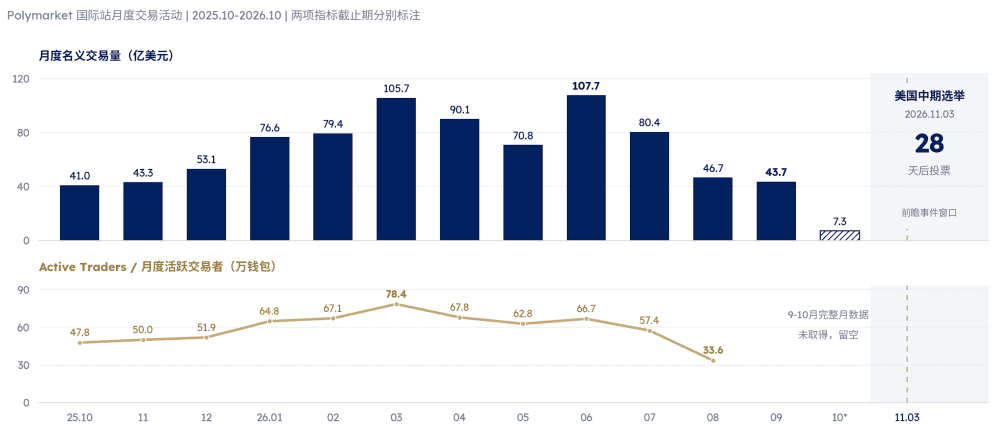
With the US midterms entering their final full pricing month, political, fiscal and regulatory expectations will be reflected more frequently in prediction markets.
The long-term value of prediction markets is not simply betting on election outcomes, but converting political and macro events into real-time probabilities.
In October, focus on observing how probabilities shift rather than taking an early position on a single political outcome.
Chart 12: With the midterms approaching, prediction markets become a real-time pricer of policy risk
Source: Dune, Merit Asset Management
4. Digital assets: The liquidity-trade characteristic returns
Cooling labor data and reduced hike expectations favor high-beta assets, but elevated long-end yields mean global financial conditions have not genuinely eased.
Stay disciplined: scale in gradually, don't chase, don't use leverage, don't treat it as a cash substitute.
Chart 13: Sustained net ETF inflows; bitcoin's marginal pricing power is being institutionalized

Source: Dune, Merit Asset Management
5. Infrastructure: What is truly scarce in the AI era is power and physical assets
AI capex is diffusing from chips into the grid, power generation, cooling, energy transport and data-center ancillaries.
Relative to pure valuation trades, these assets simultaneously offer AI growth + inflation pass-through + long-duration cash flows.
Chart 14: The AI bottleneck shifts from chips to power and the grid; physical assets enter an era of scarcity

Source: IEA, Merit Asset Management
03 October Watchlist
Growth, inflation, elections and AI enter a concentrated verification period.
1. FOMC minutes: A pause is largely locked in; the tightening path through year-end still needs confirmation
Focus: whether the September hike was a one-off credibility repair, or whether the Fed retains room to tighten further this year.
Market reaction: a hawkish tilt favors the dollar and short-duration bonds and pressures long bonds; a labor-focused tilt supports short-to-intermediate bonds and growth assets.
2. US CPI: Cooling inflation helps the long end, but fiscal supply and term premium remain key constraints
Verification focus: whether the energy shock continues to pass through to core goods, wages and services inflation.
Market reaction: falling inflation benefits short-to-intermediate bonds and tech; a re-acceleration favors the dollar, short bonds and energy, and pressures long bonds.
3. US midterm elections: Front-loading intensifies as policy risk premium re-prices
Verification focus: whether shifts in expected congressional control affect fiscal, tax, tariff, energy and tech regulation.
Market reaction: rising uncertainty benefits gold, the dollar and macro hedges; rising fiscal-expansion expectations pressure long-end Treasuries.
4. Global central bank meetings: The Fed pauses, the BOJ turns hawkish; carry-trade risk rises
Verification focus: the Fed's policy path after the pause, and whether the BOJ signals faster hikes.
Market reaction: if the Fed pauses while the BOJ turns hawkish, the yen may strengthen, raising volatility across global carry trades and high-beta assets.
5. AI earnings season: Revenue growth alone is no longer enough; the market turns to ROI and the balance sheet
Verification focus: whether AI revenue can keep pace with capex, whether free cash flow can cover expansion, and whether financing pressure keeps rising.
Market reaction: if revenue and cash flow are delivered together, AI hardware continues to benefit; if capex surges without commensurate returns, high-multiple AI assets face re-rating.
04 Asset Allocation Views
Chart 15: October — overweight carry and AI delivery; cautious on long duration and high beta

Source: Merit Asset Management
Note: tactical adjustments based on changes as of October 6, 2026.
1. Strategically: in a high-rate era, buy cash flows, not duration
Overweight: short-to-intermediate bonds and private credit — turn high rates into deterministic returns
Cash is not the core holding; short-to-intermediate bonds are. Cash only preserves liquidity; the portfolio's core holding should lock in coupons and cash flows through short-to-intermediate bonds and high-quality private credit.
Overweight: infrastructure and quality cash flows — buy assets that can traverse cycles
AI, power and energy capex are still expanding; infrastructure combines cash flows, inflation pass-through and long-term demand support.
Retain: AI and Asian scarce growth — buy only delivered earnings
Continue to hold structural opportunities such as AI hardware, Korean semiconductors and Chinese tech going global, but no longer rely on pure valuation expansion.
Cautious: long duration and high beta — do not bet on a single direction
Fiscal, inflation and growth paths remain contested; neither long bonds nor high-multiple growth suits an early bet on one macro outcome.
2. Tactically: four trades for October
Short-to-intermediate bond trade: raise short-to-intermediate exposure, keep avoiding long duration
Cooling labor data helps the short end, but long-end yields above 5% require genuine improvement in fiscal and inflation conditions before a trend reversal can be confirmed.
Energy shifts from an offensive position to an insurance position: stop chasing oil higher
If Middle East exports keep improving, gradually take profits on tactical positions; if Hormuz deteriorates again, continue to hedge through energy and macro funds.
AI shifts from index trades to earnings delivery
Add: HBM, memory, advanced packaging, power, and companies whose AI revenue has already been delivered.
Reduce: highly levered, funding-dependent pure-concept AI assets with weak free cash flow.
Asia: wait for long-end yields to stabilize before adding elasticity
If the 10-year Treasury yield stabilizes and declines, prioritize adding in this order: Korean semiconductors → Hong Kong tech → Chinese tech going global, rather than indiscriminately increasing EM beta.
05 Risk Monitor
1. Core risk within the base case: long-end US yields break higher
Even if the Fed pauses, fiscal policy, AI investment and inflation could still push 10-year Treasury yields higher.
Assets to watch: long-duration Treasuries, US growth equities, gold, the dollar.
2. Tail risk: energy triggers a second round of inflation
Hormuz has not genuinely returned to normal; any transit disruption could push oil prices and inflation expectations higher again.
Assets to watch: energy, TIPS, macro hedge funds.
3. Tail risk: AI return on capital begins to be questioned
If capex keeps growing rapidly while revenue and free cash flow fail to be delivered in tandem, high-multiple AI assets could shift from an equity story to a credit story.
Assets to watch: US tech, AI data centers, semiconductors, Korean equities.
4. Structural risk: liquidity and underlying-asset divergence in private credit
Redemption pressure has eased at the margin, but products with software concentration, high PIK ratios and limited liquidity still require focused due diligence.
Assets to watch: non-traded BDCs, direct lending funds, software-focused private credit.
5. Event risk: policy volatility ahead of the US midterms
With the November 3 midterms approaching, October is the final full pricing month; rhetoric on tariffs, fiscal policy, energy and tech regulation could raise market volatility.
Assets to watch: the dollar, Treasuries, US equities, Asian export supply chains.


